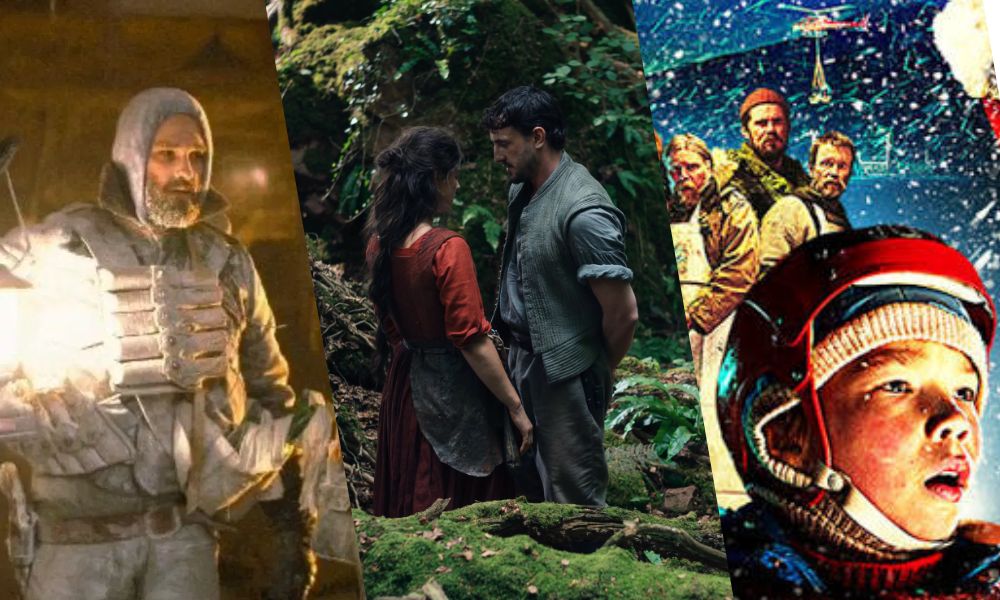

With credits including Hamnet, Mission: Impossible and The Little Mermaid, Film Devon chats to Devon-based visual effects artist John Sellings.
From working in the music business, to creating magic in the film and television industry, Selling’s career journey across the creative arts is fascinating. Working in visual effects (VFX) as a Senior Compositor, John shares some insights into his work, how he got started in his career and the productions he has been working on that are seen in cinemas around the world.
You work in the visual effects department as a Senior Compositor, tell us about the job and what it entails day to day.
My main role is as a Senior Compositor, principally using a computer programme called Nuke. I work primarily on TV shows and films but have dipped into advertising, gaming, animation and even funfair rides!
The role entails taking all the elements for a shot from what was filmed, maybe some 3D elements or a digital matte painting, and then creating the final image. The work tends to be a mix of creative and technical aspects and considerations, especially on very high-end film and TV.
How does your department fit into the overall production and film making process?
The compositing department tends to be at the end of the production pipeline, so we would not normally start until the other departments such as 3D or animation have already done a certain amount of the work already.
This can however change as sometimes we might be involved from the start creating pre-visualisations of the shots and then take those shots and rebuild them into the final image that is seen onscreen.
Does the Director come to you with a specific brief or do you need to come up with creative ideas to deliver what they are envisioning?
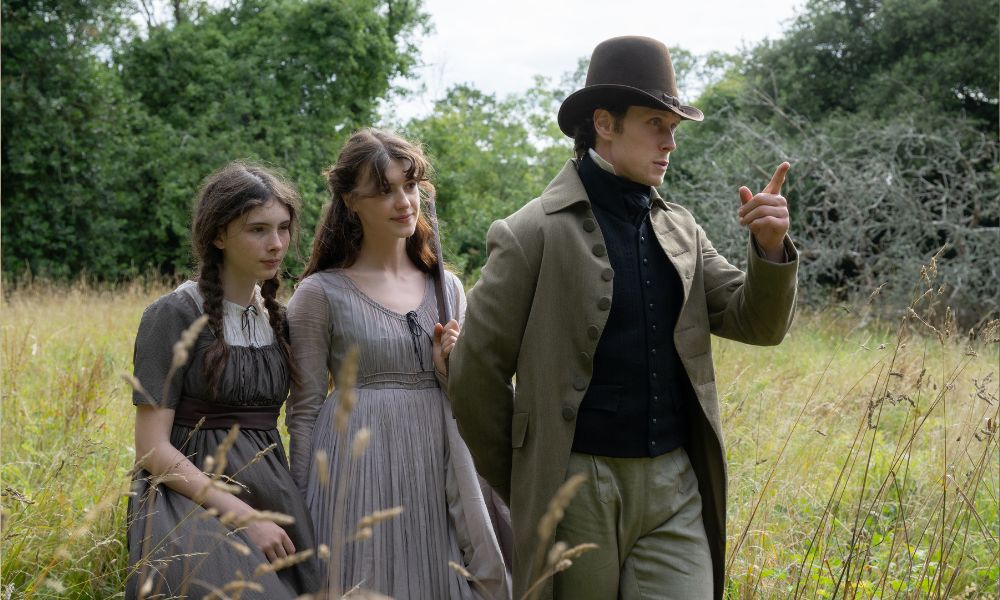
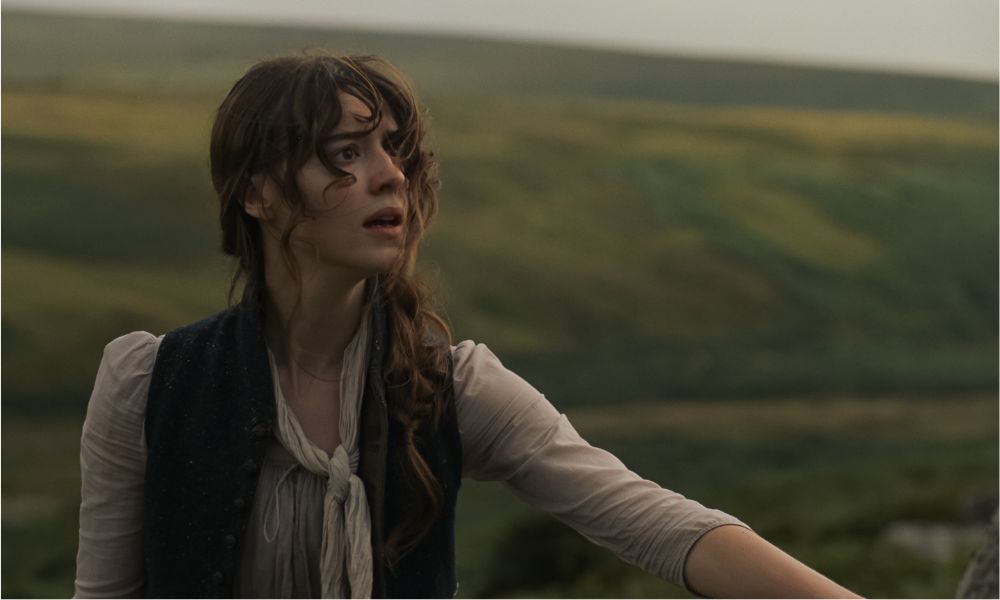
On most high-end projects there will be a team of supervisors for each department who filter the information for each shot from the Director, who is the main creative. I would normally be advised by the Compositing Supervisor who understands all the shots and can then direct myself on what is needed. Hence some shots might be very creative if the Director is not too sure what they want and then others it is a very clear brief, so I might just be fixing something wrong in the shot like in Hamnet where a piece of studio lighting equipment was visible through a window.
“If I could give one piece of advice, it is NETWORK, NETWORK, NETWORK.”
How did you get started in the film industry?
I was always interested in both film making and music, so for the first 30 years of my life I was mainly in the music side of things, working in a music venue called The Square in Harlow, Essex, as well as with bands such as Iron Maiden, The Subways and the Blockheads.
However, I always wanted to work in film and after attending Film and TV Design in Hull, UK and studying VFX (visual effects) in Vancouver, Canada, I returned to London to start my career. Initially I was mainly a Junior Nuke Compositor but I also worked on numerous short films and projects as an Onset Sound Recordist, First Assistant Director, Lighting Gaffer and whatever else was needed! Through this I learnt lots of new skills and more importantly was able to network with fellow film makers – which if I could give one piece of advice it is NETWORK, NETWORK, NETWORK.
What skills are most important in your work?
Nuke compositing is a very technical role so a complete understanding of the software is a must. In addition, an understanding of how light and cameras work is important, especially when trying to recreate something that exists in the real world.
Like most roles in film, it can also be pretty hard work, so a willingness to work long hours is a must but that sometimes is driven by a passion for the work you are doing anyway. Alongside that is trying to keep a positive attitude even when it looks like a mountain of work in front of you!
How do visual effects influence films in ways audiences may not consciously notice?
I think a lot of how visual effects are used depends on the actual film and what it is trying to do. There is a lot of backlash against ‘too many visual effects’ but I think that is sometimes misguided – as well as employed by companies as a gimmick to promote their film.
By all this I mean, if you have a big Marvel film with flying creatures and spaceships, there are going to be a lot of visual effects by the nature of what they are trying to create. So these visual effects are very visible to the audience. There is however another type of VFX – hidden VFX – where the idea is for the audience to not know that something has been done. This might be like in The Crown (Netflix) where we created Buckingham Palace, or we add in huge crowds like during the show’s Princess Diana funeral sequence that I worked on.
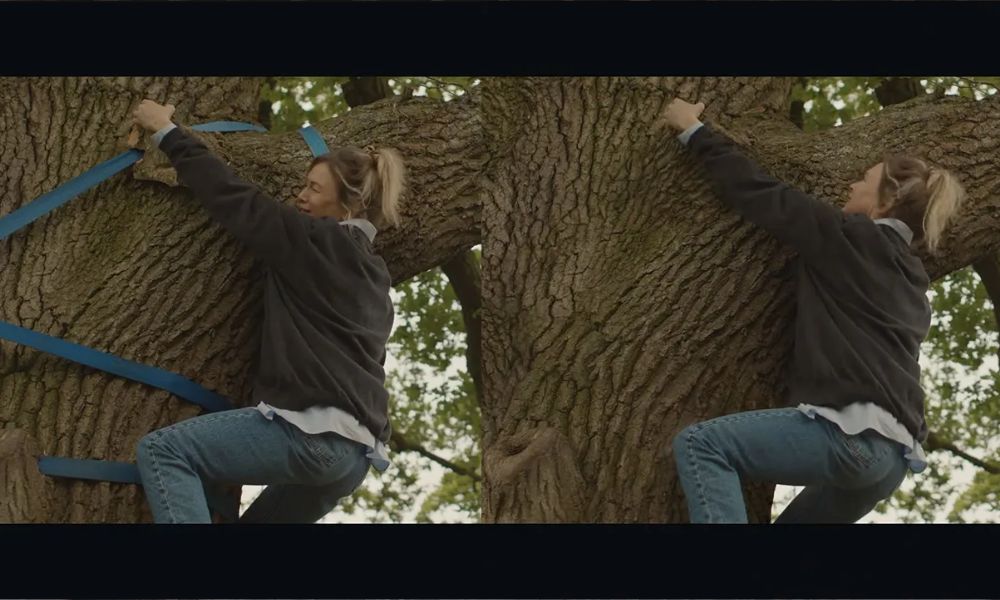
Pretty much every film has some degree of visual effects in it, even something like Bridget Jones: Mad About The Boy. In this there was a lot of clean-up, adding mobile phone screens, adding plants to the front of houses – and for health and safety reasons, removing the big blue harnesses when the cast are climbing up and down trees!
So visual effects ultimately is a tool to help the Director create the film they want in a way that does not take the audience out of the film they are immersed in.
What work in your career to date are you most proud of?
There are quite a few moments and seeing your name in the credits is always good – to think of how many people have seen my work around the world. When you see something like Bridget Jones: Mad About The Boy was a big hit, that was nice to see – that one is sometimes the one that people say ‘wow’ about!
There are also the behind the scenes things that can be super cool – an example being receiving an email that says ‘INSERT FAMOUS PERSON loves your work’. That can be very satisfying indeed!
What has been the most challenging project you’ve worked on?
A lot of projects have been quite demanding and the crazy hours and workload have normally led to being exhausted at the end of it!
Each project tends to have its hurdles and one I remember was doing a large film for an architectural film showcase in Hong Kong which required projecting a huge 8K film split into eight slices. It was definitely a bit nerve-wracking being in the UK and hoping all the work we had done worked in Hong Kong! However, I was also involved in the earlier Hong Kong shoot so a free ‘working holiday’ was a definite bonus!
You worked on the Oscar and BAFTA-nominated Hamnet, tell us about your work on that and what it was like working the film?
On Hamnet I was part of the Visual Effects crew so it was a mix of clean-up of shots and working on the end Globe sequence seen in the film. The Globe sequence was fun and great to see the final shots knowing that only the first lower section was physically built and the rest is a 3D model with footage of people in front of green screens – another good example of visual effects helping the filmmaker tell their story.
Hamnet also had a super fun shot which was a nice example of hidden VFX – with a large piece of lighting equipment that was accidentally left outside so it was visible through the window during a scene. This was a very long shot and took a long time to erase the equipment, recreate the garden view and return all the little plants hanging in the window, so hopefully no one will ever know!

“Even with new techniques and AI, films will (hopefully) always need the skills, knowledge and talents of the amazing artists all around the world.”
How has the evolution of technology changed how visual effects work now?
Film making technology is constantly shifting to help achieve and improve the believability of what ends up on the screen as well as being able to deliver complex shots within ever decreasing deadlines.
Having said that, shots are still achieved using the tried and tested techniques that have existed since filmmaking started. Even with new techniques and AI, films will (hopefully) always need the skills, knowledge and talents of the amazing artists all around the world.
What is a common misconception people have about visual effects work?
Aside from audience perceptions, it is sometimes not fully understood how long some things can take to do and sometimes a small throw away comment from the Director can completely change everything and turn a 6pm finish into a midnight or early morning clock off! But if it makes the film better then it is all part of the fun!
For someone looking to get started in this area of the industry, what do you advise they do?
I would encourage anyone to find out what is on offer – whether in school or the community. Here in Ilfracombe, North Devon I run workshops on visual effects and other creative skills so find out what is out there.
As well as this, be proactive and passionate. There is so much online you can watch and learn nowadays. Watch films and TV and find out how things were done. Learn all the roles and skills that are needed to make what you see on the screen.
Then make your own films. Start small and try different techniques. It is all about failing and learning so that when you look at creating a longer, proper short film you understand how to make things work, especially if you have a cast and crew and it is costing time and money.
Lastly, network as much as you can. Talk to people and be friendly. You never know who you might meet in your local café or at one of the many film or animation meet ups that happen in the Devon area.
Outside of work, what fuels your creativity?
I still maintain my love of music and strum the guitar once in while whilst checking out new bands. I have mellowed in my old age and listen to a lot of classical music, anime soundtracks and loving to get to know some of Japan’s biggest bands from Mrs Green Apple (my musical happy place) to Ado and Phantom Siita.
I am also a huge fan of manga and comics, especially the works of Junji Ito. As a side project I am working with a friend Troy Martin on our own manga and comics under the ‘Sweet Nightmares’ banner – as well as setting up a Redbubble shop selling our artwork (shameless plug!).
Anime is also a big interest and I have been teaching myself animation in a variety of programmes including Clip Studio Paint and Blender.
We are also setting up a small anime team with Exeter-based animators and writers and hopefully will look at producing some small anime stories when time permits!
You work for productions all over the world but are based in North Devon, what do you like about the area?
The main reason to move to Devon was because my brother and family live in Exeter and my folks followed them down to live near Crediton. I always wanted to live by the sea and thus North Devon with its beautiful rugged coastline was a no-brainer.
I love living in the area as well as being heavily involved with the local community. You also cannot beat going for a walk and being on the cliffs ten minutes later!
What films are you looking forward to in 2026?
As I have been so busy over the last few months I have struggled to see anything but looking forward to catching up on all the films I missed especially One Battle After Another and the Demon Hunter and Chainsaw Man films. I also have a pile of Blu-rays to work through including films by the mighty Satoshi Kon (Perfect Blue and Paprika) and a Makoto Shinkai boxset (Your Name and Weathering With You). Lots to catch up on!
Follow John Sellings on Instagram, including for updates on North Devon visual effects workshop news at @johnsellings.vfx and on IMDb.
Redbubble Store John Sellings: johnsellingsArt.redbubble.com
Redbubble Store Sweetnightmares: SN-Media.redbubble.com
The Meet The Crew Interview Series
Film Devon’s Meet The Crew spotlights the Devon film and TV crew network with interviews about their career, work and experiences in film and television, as well as advice and guidance for people interested in working in the screen industries.
Follow @filmdevonuk on Instagram for more Devon film and television industry news, features and behind-the-scenes.